
Saint Rotain.
Apparently I spent a good chunk of my youth looking out at their hermitage. That is, if the saint ever existed for there simply is no real historical evidence.
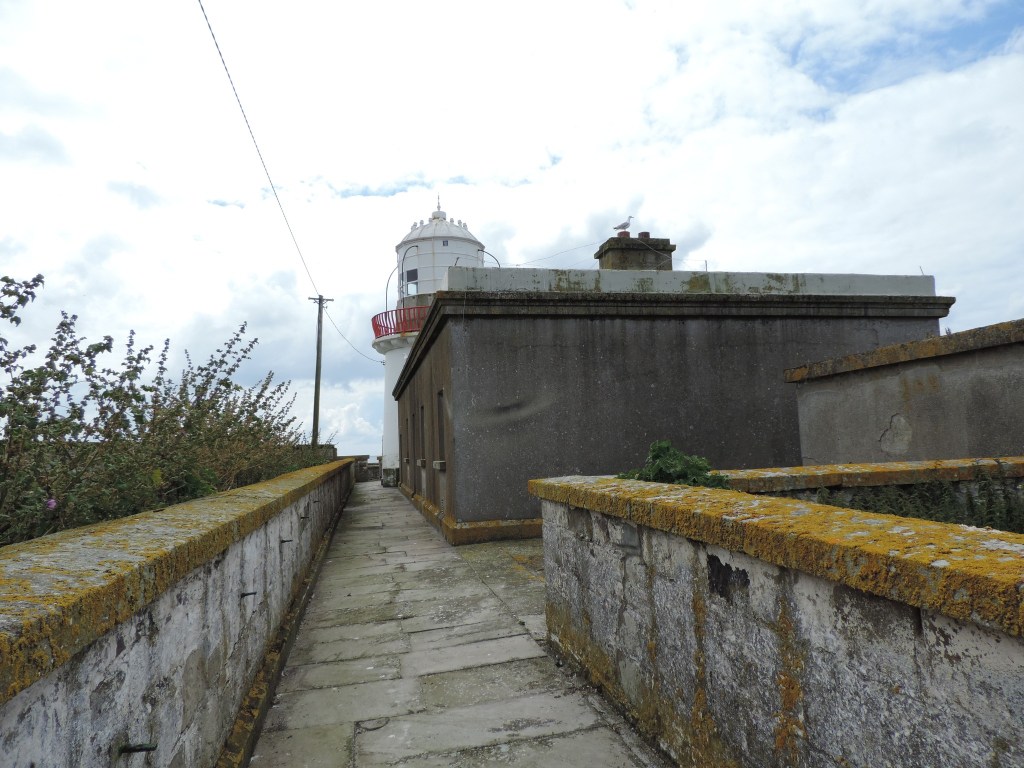
But if they did then the rock on which the saint lived was part of the view from my grandfather’s house for it was also the site of a lighthouse built in the 1830s to guide seafarers into the large natural harbour of Killybegs on the north-west coast of Ireland.
The first I heard of Rotain was on a recent visit to that lighthouse on Rotten Island. Rotten was never a name that made sense applied to this sturdy lump of rock, but the notion that the name suffered in translation, originally taken from that of a hardy hermit of ancient times makes sense so I was glad to be introduced to naomh Rotain, even if nothing else can be told of the saint’s life.
My grandfather’s cottage overlooked the harbour, and every school holiday the lighthouse would be a distant part of the view, white walls gleaming in sunshine, light flashing every four seconds in the darker hours. In youthful years I must have taken boats past the island some hundreds of times as I headed out to the best angling spots in search of elusive specimen pollock. Sitting on the old garden bench in the evenings we watched trawlers returning to harbour, passing the island and its lighthouse, gauging their catch by how low they were in the water. The lighthouse was a gentle, homely, presence, even if unvisited given the trickiness of access and the presumption at least that casual trippers were forbidden.
My grandfather died thirty years ago, his cottage sold, my visits to Killybegs limited to a few hours each year, but the lighthouse remains a vivid presence in my mind, its distant shape holding a memory and something of the essence of home.
A distant presence until last summer when a notice appeared on social media; a new company would be providing guided trips to Rotten Island and its lighthouse. I shared the message with my family thinking that it might be something we would like to do sometime in the vague future, never anticipating the enthusiastic response that led to a booking for the following week. Four of us made the trip; my mother joining us for the journey but remaining ashore sharing memories of lighthouse keepers and their families.
The weather was kind that day, giving us a beautiful crossing to the island and a pleasant wander with our hosts. We clambered over rocks, climbed steps, looked into the tower, enjoyed the reverse of the view looking back to the town, and were astonished by the gardens. If there was one thing I was not expecting on this tiny, rocky, island, it was the gardens.
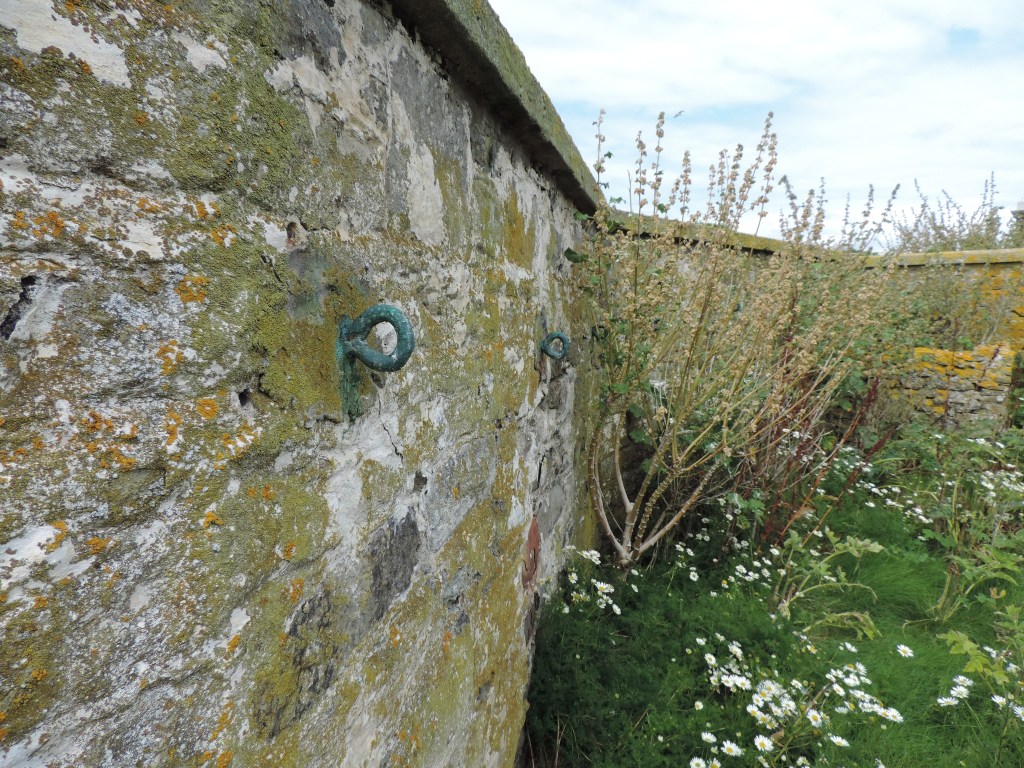
Around the tower and the keeper’s cottage, every possible scrap of useable land had been surrounded by thick walls, presumably nourished with seaweed, and used to grow vegetables. Or more accurately, I assumed that these little gardens would have been used for growing food, providing essential produce in a hard landscape through hard times and challenging weather.
But over the following days as I shared the story of our lighthouse trip an online commentator chipped in with her personal recollections.
Dorothy is one of the last people to have lived on the island, her father was the last resident keeper. They had indeed grown vegetables, and lots of rhubarb, mostly in the walled area at the end that faces out into the bay, but on the sheltered side, in the area close to the keeper’s cottage, the garden was grassed and they grew flowers.
This isn’t a remote island, it’s easy enough to get to in a small rowing boat, but life must have been tough enough at times, yet even so, the little community living on this rock took time and gave space to create something for pleasure, for moments of delight and relaxation.
How was it for the hermit saint I wonder?
Killybegs, Cealla Beaga in Irish, is named for the little chapels or monastic cells that once dotted this landscape. The idea of a holy person taking to the island is not so far-fetched; it’s easy enough to imagine a beehive-shaped stone cell, its entrance facing into the harbour away from the weather; a trough to capture rainwater, food gathered as it is said of the monks on the Skelligs; a few vegetables grown in a sheltered spot, eggs gleaned from nesting gulls, shellfish prised from the rocks.
I knew nothing of a Saint Rotain before this visit, but now that the idea of the hermit has been suggested I am pretty certain that such a person lived, prayed, and did penance here, and gave their name to this rock, the Rotten island of my childhood.
Visits to Rotten Island are organised by Killybegs Sea Safaris: https://www.killybegsseasafari.com/





 Colin Brady
what an interesting read, such a shame I hadn’t spotted before we did the WAW .
Diarmuid
LikeLiked by 1 person