
This is taken from an old dissertation on links between pastoral practice and pschoanalysis. At the time I thought that Oskar Pfister, a Lutheran pastor, psychoanalyst, and close friend of Sigmund Freud, would merit a concentrated piece of work in his own right.
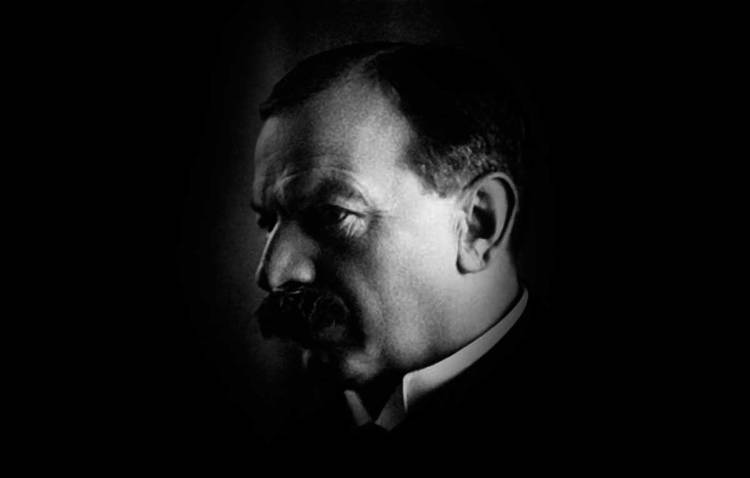
Oskar Pfister (1873-1956) was a Lutheran pastor in Zurich who had acquitted himself sufficiently well to have been offered a Chair of Systematic and Practical Theology in 1908, which he refused in favour of continuing his work as a local pastor. He became a psychoanalyst under Jung but remained loyal to Freud after the Freud/Jung split in 1914. Pfister’s first sustained contact with the psychoanalytic community may well have been the result of having a colleague of Freud’s, Binswanger, as a lodger thereby offering him a link into psychoanalysis that was independent of Jung.
In the preface to Christianity and Fear (1944) Pfister presents his reasons for turning to analysis:
At first I derived some satisfaction from devoting myself to the cure of individual souls. But I began to see that the traditional methods failed to have any effect on some of those who stood most in need. Observing this, I thought that the fault lay with a defective psychological attitude. I therefore eagerly studied most of the psychological handbooks extant at the beginning of the century without, however, finding what I wanted.[1]
Pfister went on to write several books and has the distinction of being the first psychoanalyst to make extensive use of client’s artwork. His work on the use of art in therapy and the implications of psychoanalysis for education were published as a book, Some Applications of Psychoanalysis, in 1923. His application of psychoanalytic theory to the education of children was probably, through his friendship with the whole Freud family, an influential factor in Anna Freud’s decision to follow the same line of enquiry.
Pfister’s friendship was so highly regarded by Freud that the latter delayed writing The Future of an Illusion ‘out of regard for’ Pfister.
In the next few weeks, [Freud wrote], a pamphlet of mine will be appearing which has a great deal to do with you. I had been wanting to write it for a long time, and postponed it out of regard for you, but the impulse became too strong[2].
That kind regard was also evident in Pfister’s reply to The Future of an Illusion, The Illusion of a Future. The Illusion of a Future was published in Freud’s journal Imago an indication, according to Roazen, of Freud’s ability and ‘willingness to tolerate disagreement’.
Pfister responded by asserting that Freud’s argument was not with the clinical manifestation of religion and its more esoteric aspects but with a more philosophical understanding of the function of religion:
… belief in demons may alienate us as metaphysics, but as neurology we acknowledge it.[3]
Roazen agrees, pointing out that Freud’s argument in The Future of an Illusion in which he presents his intellectual approach to religion, differed from his clinical approach which could be more positive as in The Wolf Man (1918)
‘Apart from these pathological phenomena, it may be said that in the present case religion achieved all its aims for the sake of which it is included in the education of the individual. It put a restraint on his sexual impulsions by affording them a sublimation and a safe mooring; it lowered the importance of his family relationships and, thus, protected him from the threat of isolation by giving him access to the great community of mankind. The untamed and fear-ridden child became social, well-behaved, and amenable to education.’ [4]
The Freud/Pfister correspondence reveals something of the close friendship between the two with Pfister visiting Freud in Vienna and discussion of having family holidays together. Freud’s relationship with Pfister was not always so smooth. During the crisis of the split with Jung Freud was suspicious of all the Swiss analysts[5] but Pfister remained steadfast and helped to found a new Swiss Society for Psychoanalysis in 1919 [6]. This new Society was addressed at its launch by Sachs, Rank, and Jones, although Sachs was unkind enough to suggest that Pfister should resign ‘because he did not seem sufficiently emphatic about sexuality forming the basis of psychoanalysis’[7]. Freud stepped in to defend Pfister but also mentioned that perhaps he had come under Jung’s influence more than he realised.
The Illusion of a Future
Pfister’s covering letter with his article, ‘The Illusion of a Future’, is friendly but cuts straight to the point as understood by the writer:
‘To be frank about it: I have a strong suspicion that you do battle against religion – out of religious feeling. …
… Whoever has fought with such immense achievements for the truth as you and argued so bravely for the salvation of love, he especially, whether he wants it talked about or not, is a true servant of God according to Protestant standards. And he who through the creation of psychoanalysis has provided the instrument which freed suffering souls from their chains and opened the gates of their prisons, so that they could hasten into the sunny land of a life-giving faith, is not far from the kingdom of God. … Will you be angry with me if I see you, who have intercepted such glorious rays of the eternal light and exhausted yourself in the struggle for truth and human love, as closer, figuratively, to the throne of God, despite your alleged lack of belief, than many a churchman, mumbling prayers and carrying out ceremonies, but whose heart has never burned with knowledge and good will?’ [8]
Pfister’s enthusiasm for the psychoanalytic project was strongly connected to his pastoral concerns as a minister of religion. His christianity was directed towards the discovery of truth wherever it could be found and his conviction that psychoanalysis was a liberating instrument that could be deployed to the good of humankind shines through here. Pfister was not going to allow Freud’s protestations to the contrary to detract him from his theological insight about human nature whereby a self-proclaimed atheist could be a more faithful adherent to God’s will that many of those who declared their religious faith in words but without a corresponding dedication to truth and healing.
‘The height of the objection [in Freud’s Future of an Illusion] is found in this sentence: ‘If, on the one hand, religion brings with it obsessional restrictions, exactly as an obsessional neurosis does, on the other hand it comprises a system of wishful illusions together with a disavowal of reality, such as we find in an isolated form nowhere else but in amentia, in a state of blissful, hallucinatory confusion.‘[9]
Pfister acknowledges that religion in its simplest forms can be an expression of compulsions and neurotic desires but questions whether compulsion is essential to the formation of a religion or of the essence of religion itself. Civilisation, he argues, represents the activity of human beings in response to their natural context:
Nothing justifies the assumption that an animalistic vegetating corresponds better to the essence of a person than does civilised growth and activity.[10]
Freud’s version of religion as an expression of primitive desires and compulsions seems to be predicated upon a brute nature that overwhelms humanity rather than taking account of humanity’s ingenuity and creativity in the development of societies and civilisation. Pfister goes on further to enquire into the relation between religion and compulsion:
But must compulsive structures really always be inherent in religion? I believe that, on the contrary, the highest religious developments in fact abolish coercion. One might think of genuine Christianity. Against compulsively neurotic nomism, which places a heavy burden with its dogmatism and embarrassing ceremoniousness, Jesus set his ‘commandment’ of love[11].
Pfister is referring to the challenge posed by Jesus to the leaders of religion of his day but the reference to ‘genuine Christianity’ and another kind of religion that is encumbered with ‘dogmatism and embarrassing ceremoniousness’ suggests that he had a more contemporary version of religion in mind as well. Some forms of religious expression may seem to manifest something of compulsive tendencies but Pfister asserts that the ‘greatest development of religion – the Israelite-Christian[12]’ did not require compulsion as an essential motivating force.
Pfister also challenged Freud’s idea that religion was simply a wishful construct, perhaps based on hopes of the existence of an ideal father. He poses the question about how one should understand atheism which may also have a basis in wishful construction:
Nemesis would have it that the atheists whom I have analysed were also led by wishful thinking extraordinarily often. Which analyst hasn’t often found atheists whose unbelief wasn’t a disguised doing-away-with of the father?[13]
Pfister continues his step by step critique of Freud’s Future of an Illusion through ‘Religion as hostile to thought’, ‘Religion as guardian of civilisation’, and then reflects on Freud’s optimistic understanding of science and its potential. At each step he suggests that the version of religion that Freud is arguing against is not the same as the religion espoused by the members of the reformed christian churches:
We Protestants know far too well how much our religion owes to thought for us to deny it its full scope. Even if Luther didn’t grant to reason the rights that are due it, nevertheless he was a theologian and scientific thinker; otherwise, he never would have become a reformer.[14]
Pfister concludes by positing his idea of what religion should involve:
A balanced religion can result only from the harmonious combination of belief and knowledge, from the interpenetration of wishful and realistic thinking, yet whereby the content of the real thinking may not, through wishful thinking, be falsified in its facts or relationships[15].
Where it may be that Freud was provoked into writing The Future of an Illusion because of his disquiet at the dominance of Roman Catholicism in Vienna, and in particular a Roman Catholic church that was becoming increasingly concerned with the assertion of authority and the control of theological thinking, it is very clear that Pfister believed that Protestant religious faith had the potential to challenge Freud’s criticisms of religion.
A Nice Anagram
In the preface to Christianity and Fear Pfister introduces a clever anagram that provides a useful insight to his approach to psychoanalysis:
Pilate’s question can really be answered only in irrational terms. It is contained in the anagram ‘Quid est veritas?’ – ‘What is truth?’ and in the answer ‘Est vir qui adest’ – ‘It is the man before you’. It is Christ. The same letters in a different order supply the best answer to the question about the essence of Christian love: ‘It is the man before you.’ It can never be framed exhaustively in logical concepts.[16]
Where both religion and psychoanalysis were making strong truth-claims and challenging the understanding of the human person and civilisation held by the other, Pfister adopts a more pragmatic approach. Freud had stated his ideal for the perfection of humanity and religion seemed to be no more than part of an inherited neurosis that placed unnecessary limitations upon human development. In doing so he was adopting a stance on truth and dogma that is comparable to the Roman Catholic position in which the metaphysical ideal is not to be compromised by the demands of ordinary living. That said, both Catholicism and Freud recognised the primacy of pastoral need. Pfister’s Lutheran background was perhaps more focused on the realities of the pastoral situation. Whatever the definition of truth, for Pfister, the most important demand is the need to love the individual person.
[1] Pfister (1944), pg 22
[2] Freud to Pfister, 16 October 1927, in Meng & Freud, pg109
[3]Roazen (1993)
[4]ibid
[5]Grosskurth, p65
[6]Roazen (1993), p558
[7] Grosskurth, pg85
[8]Roazen (1993), p559
[9] ibid, pg 560
[10] ibid, pg 561
[11] ibid, pg 561
[12] ibid, pg563
[13] ibid, pg 563
[14] ibid, pg 568
[15] ibid, pg577
[16] Pfister (1944) pg 26
 Colin Brady