
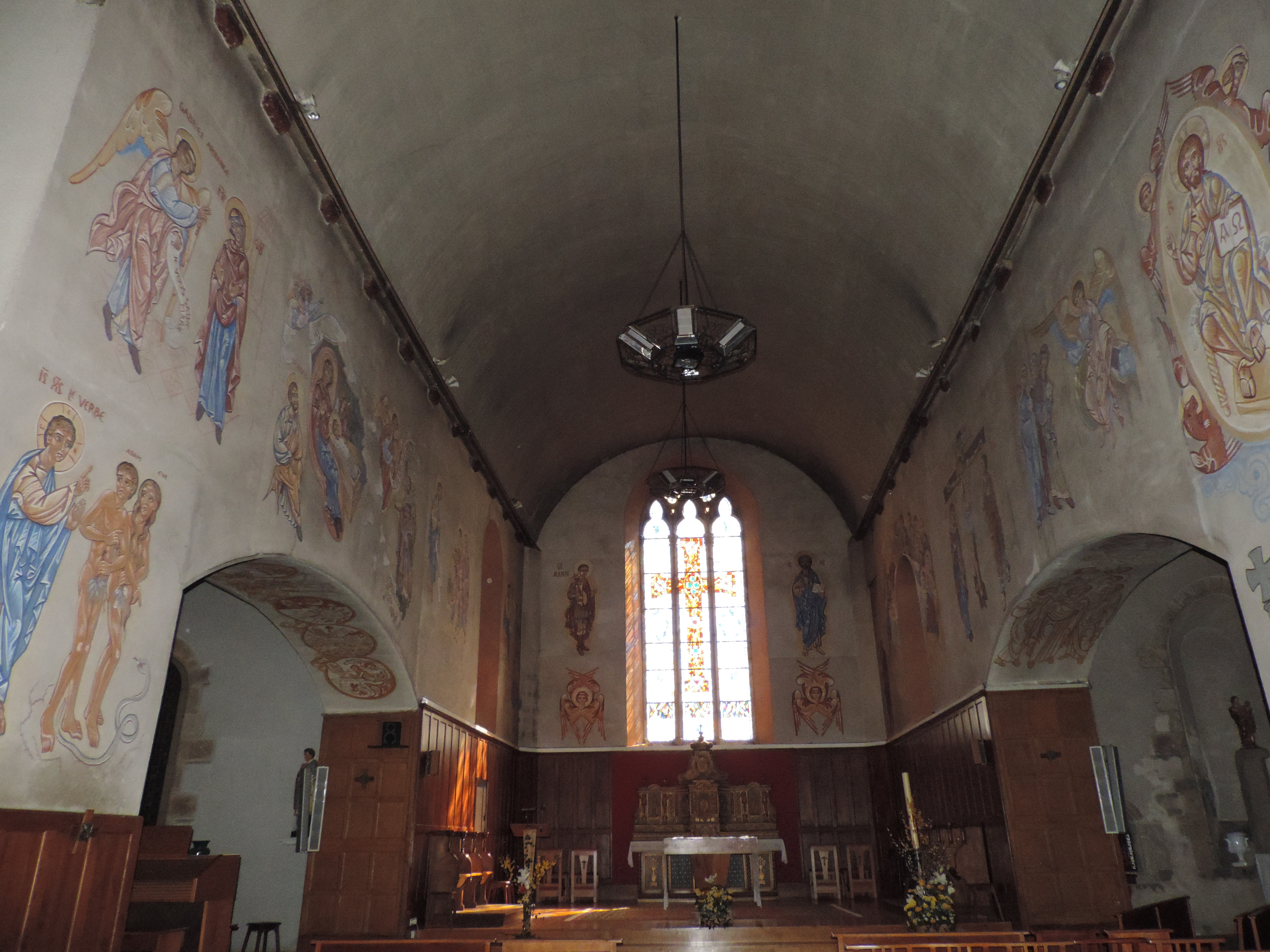
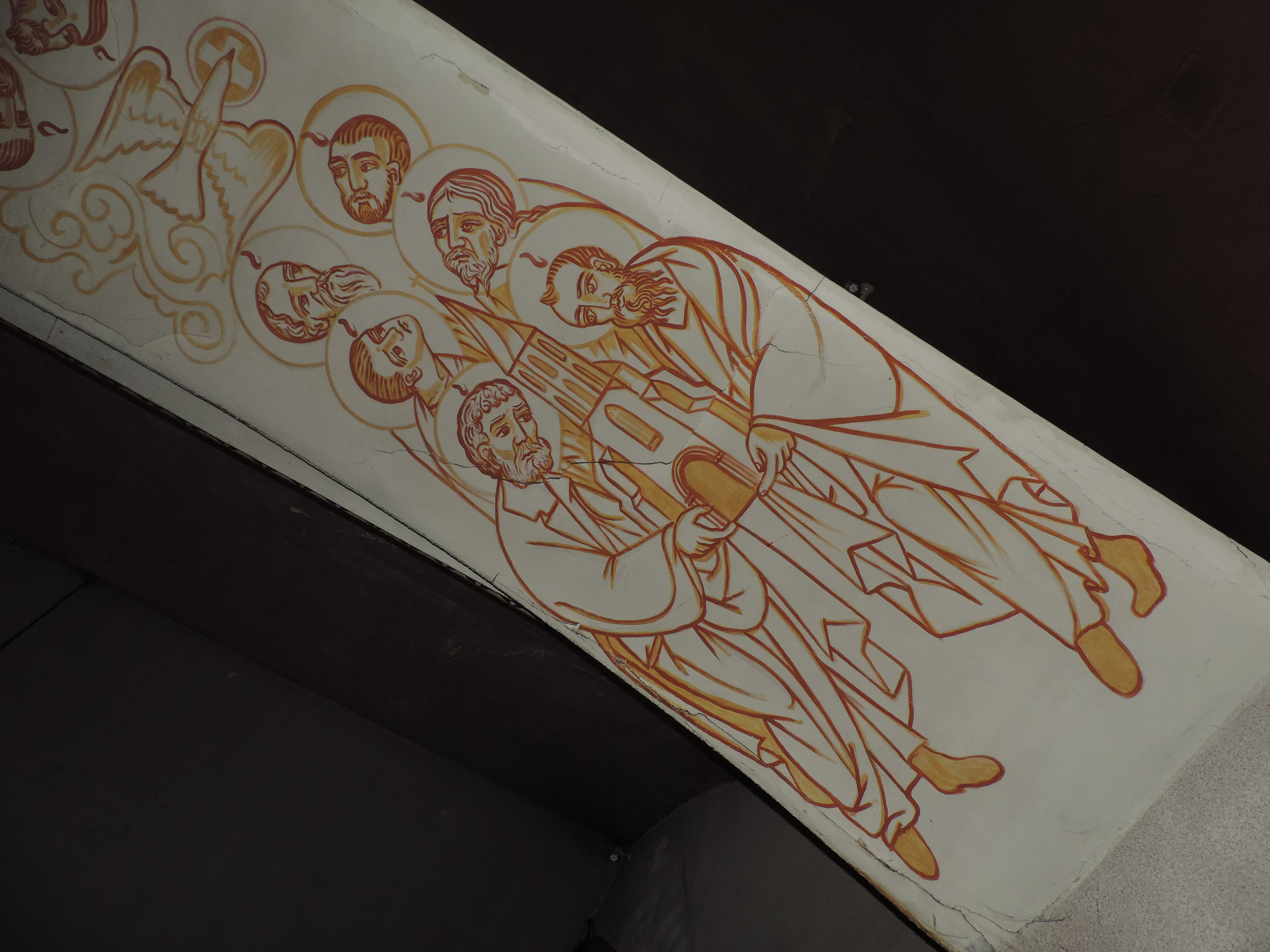
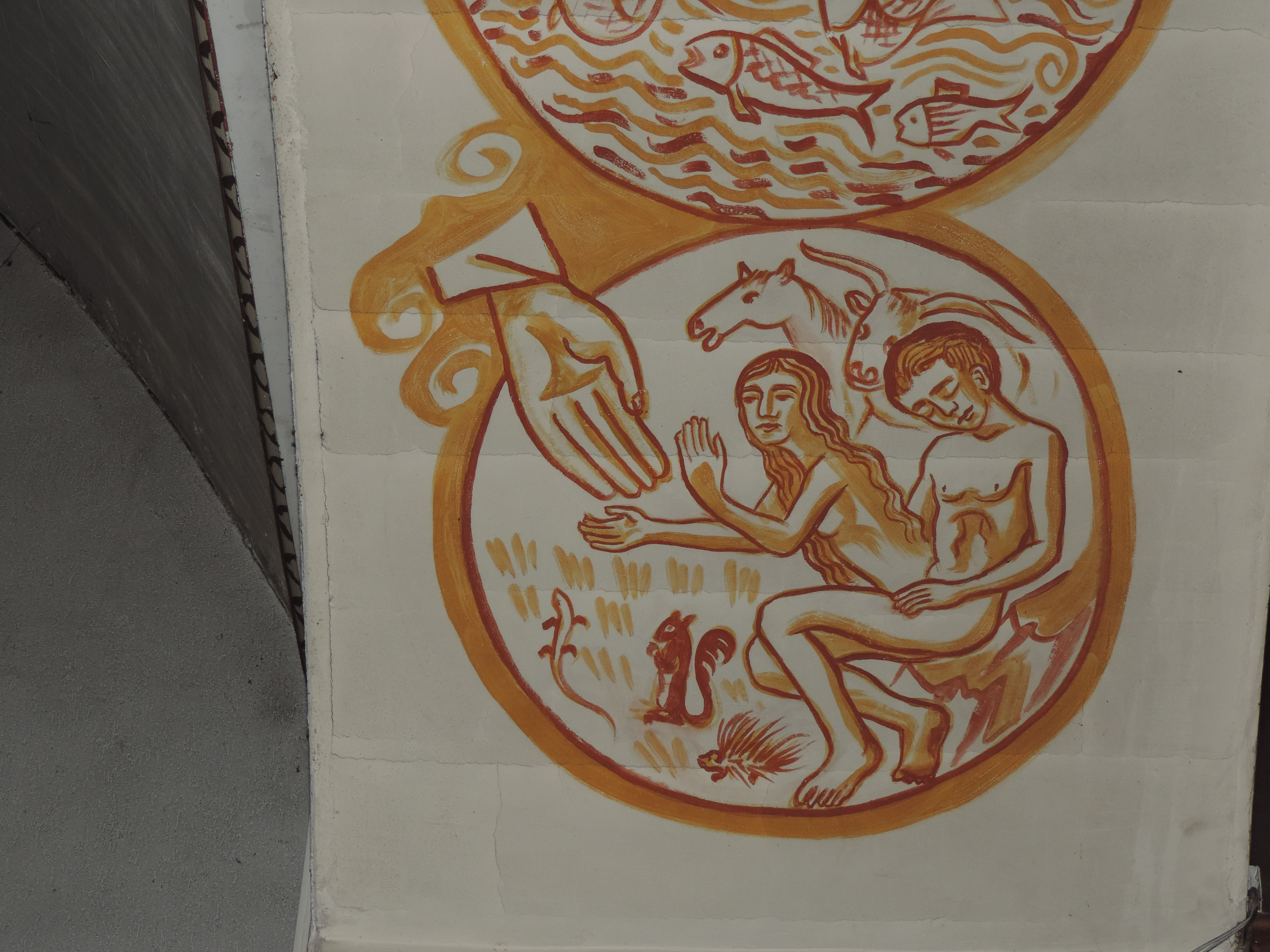
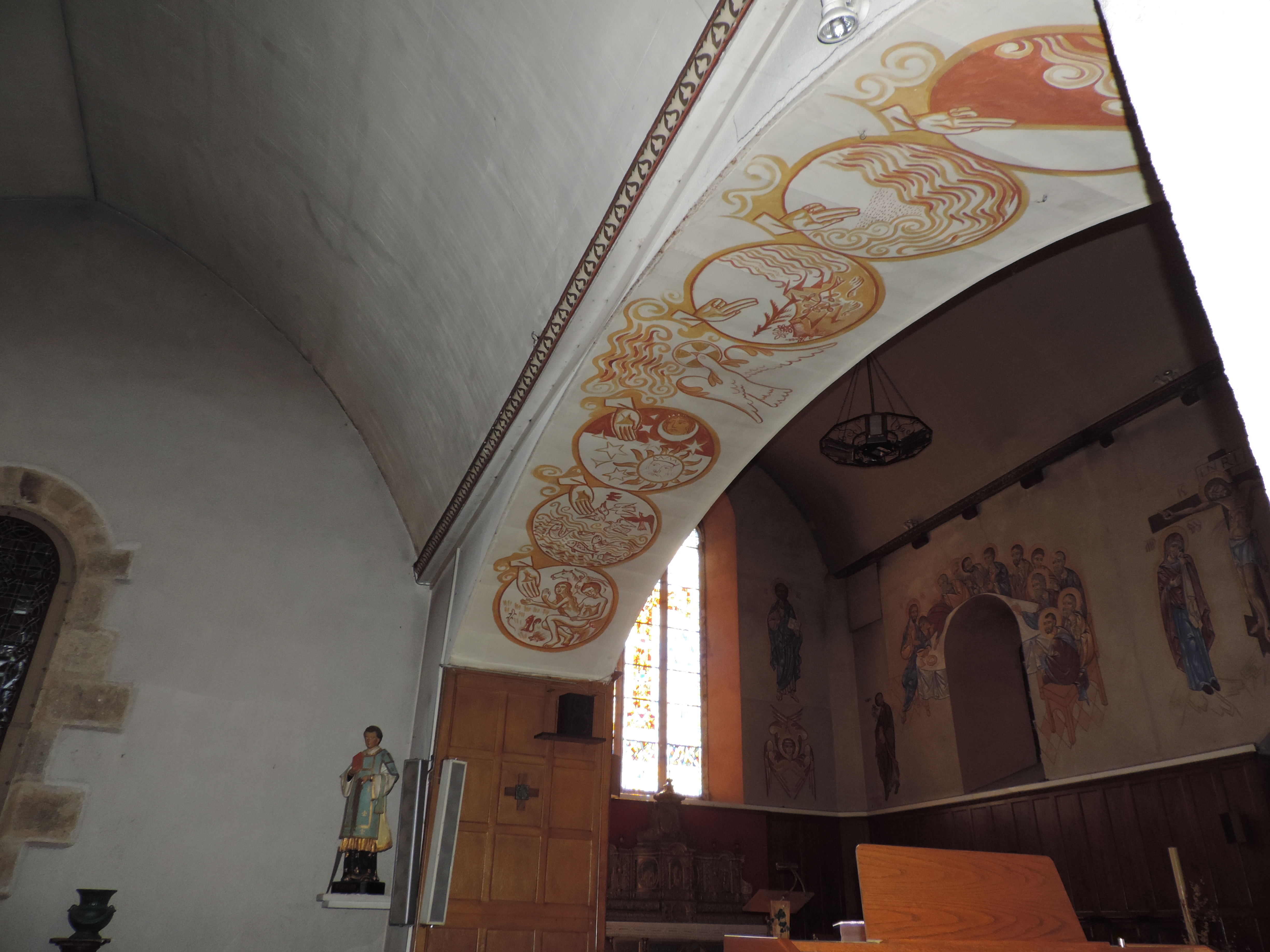
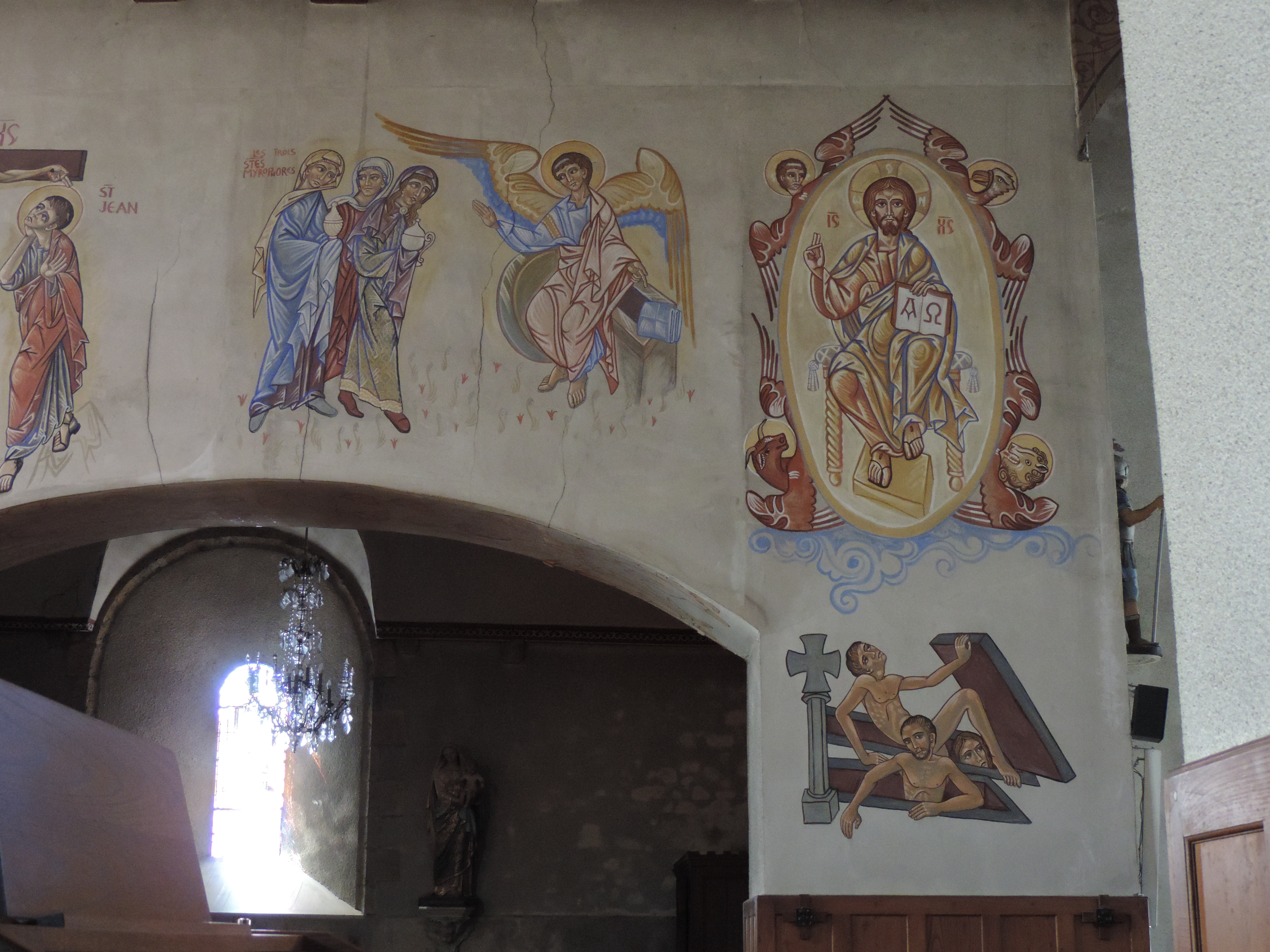
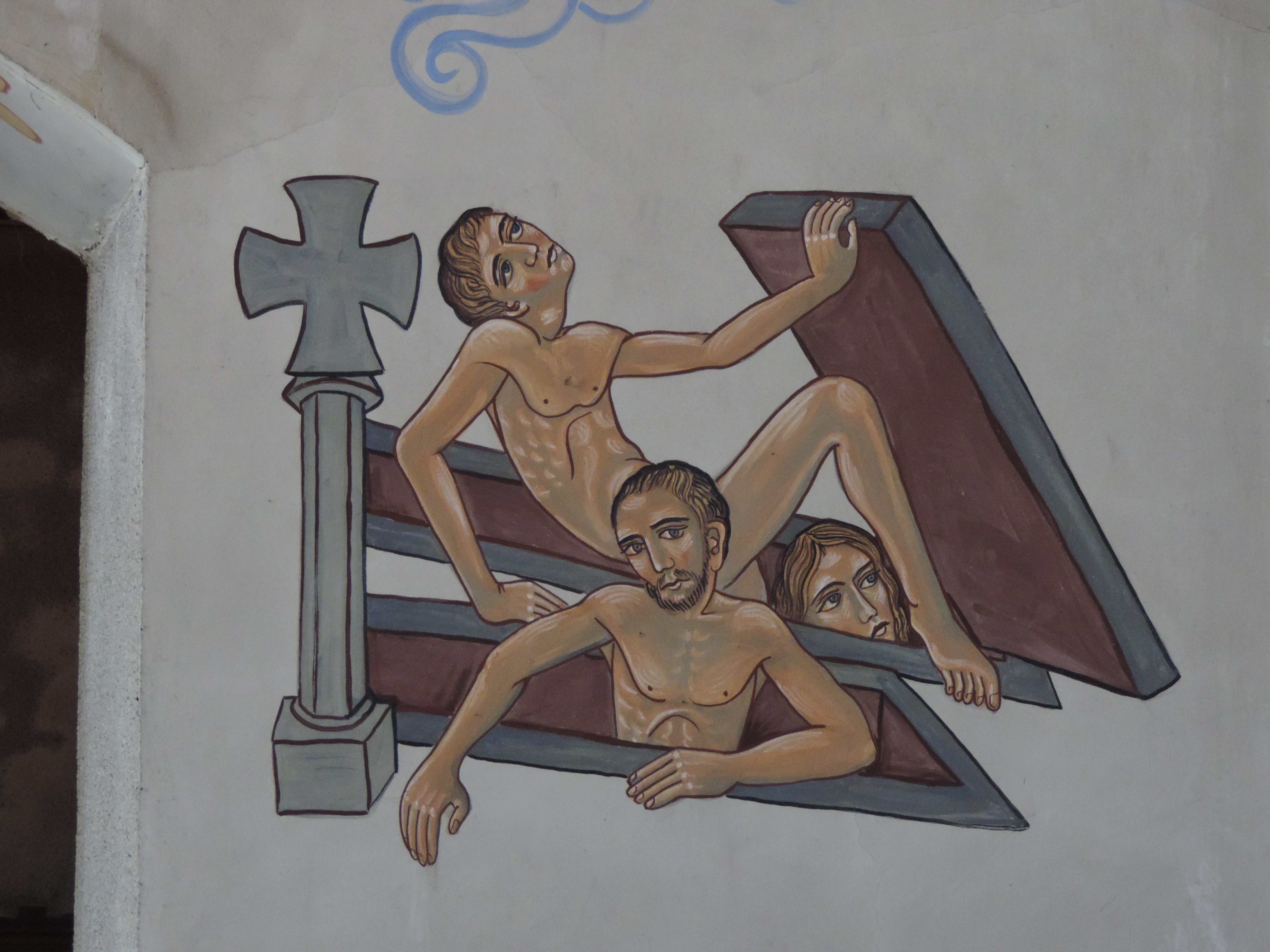
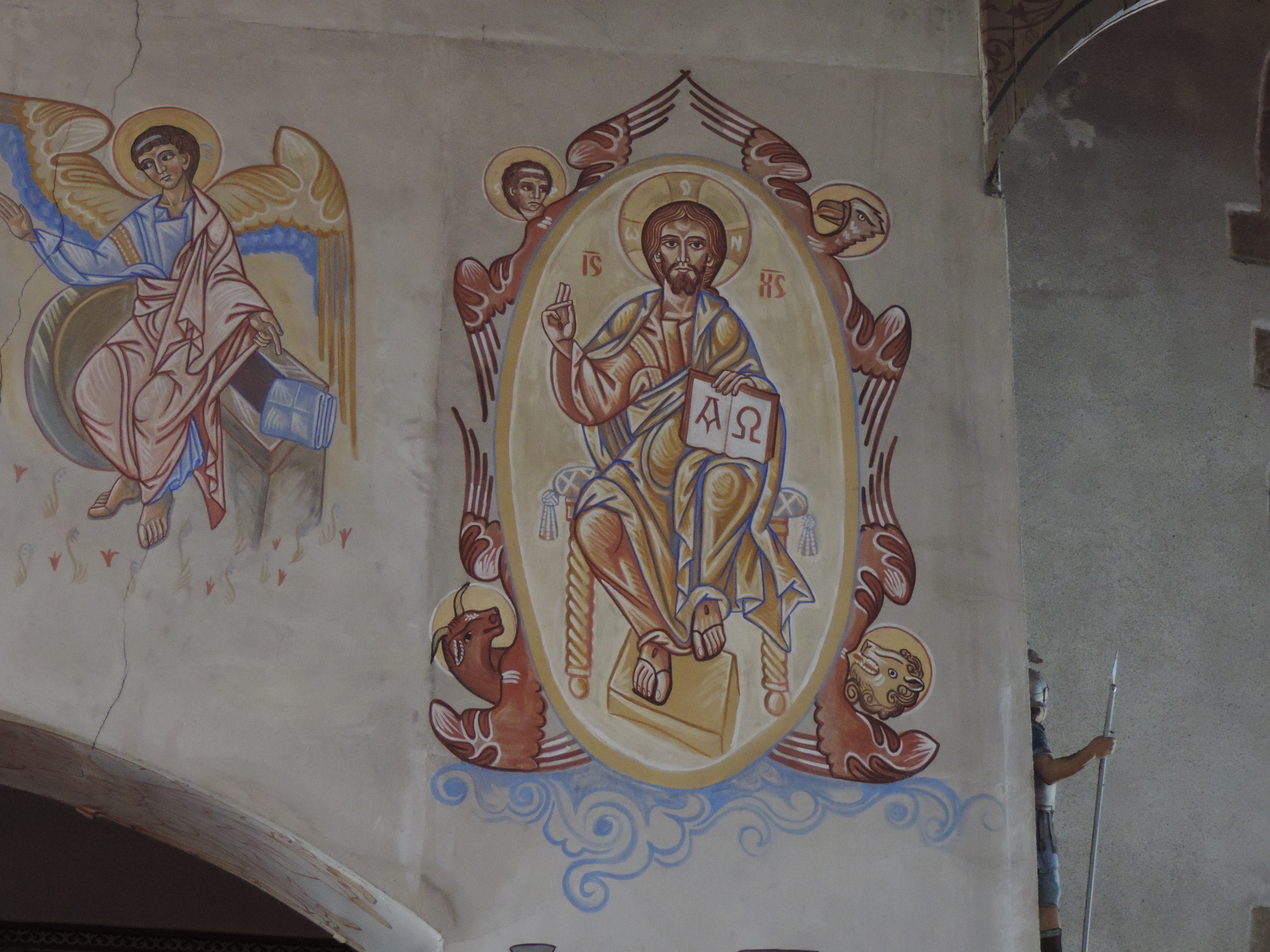
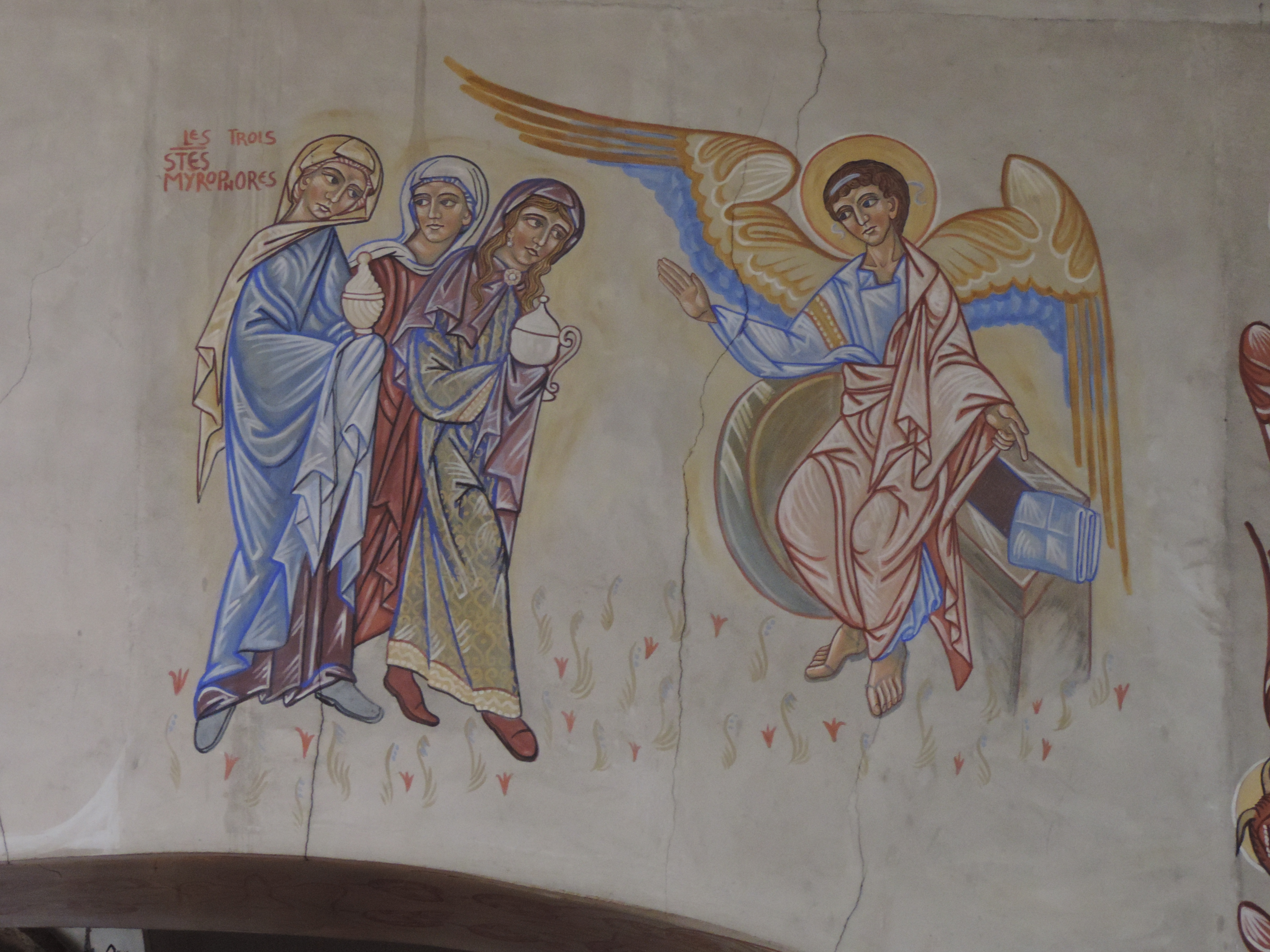
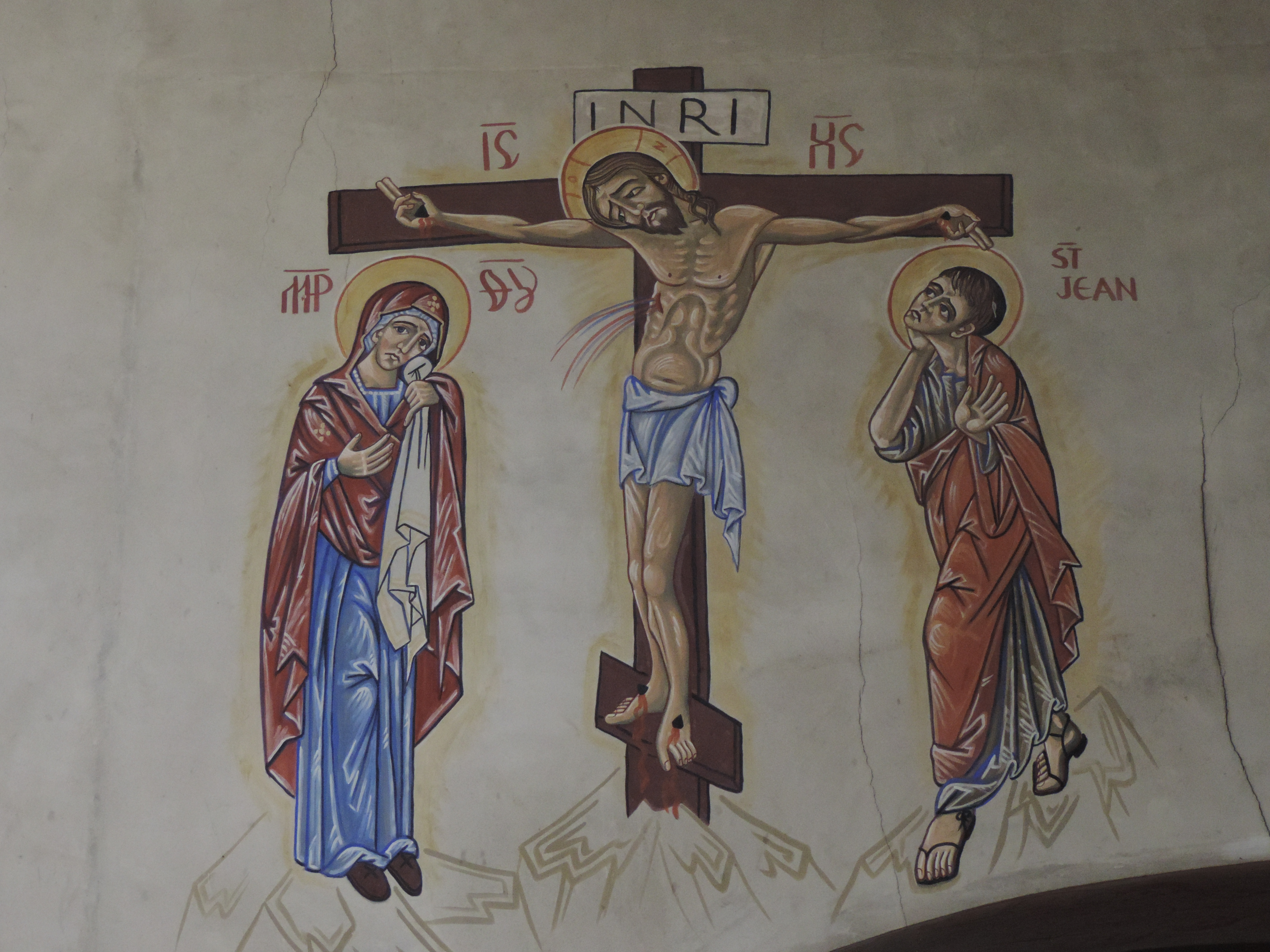
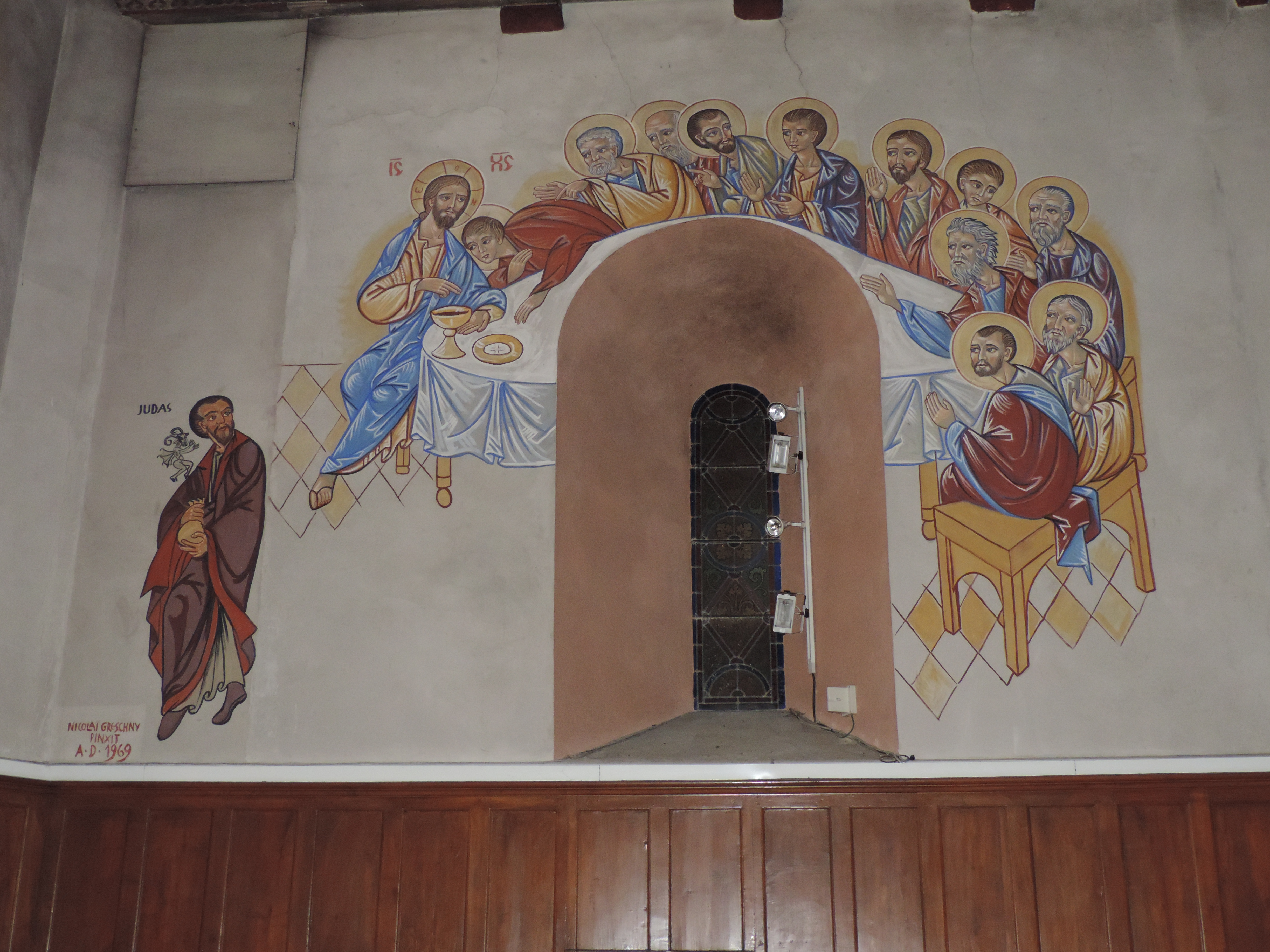
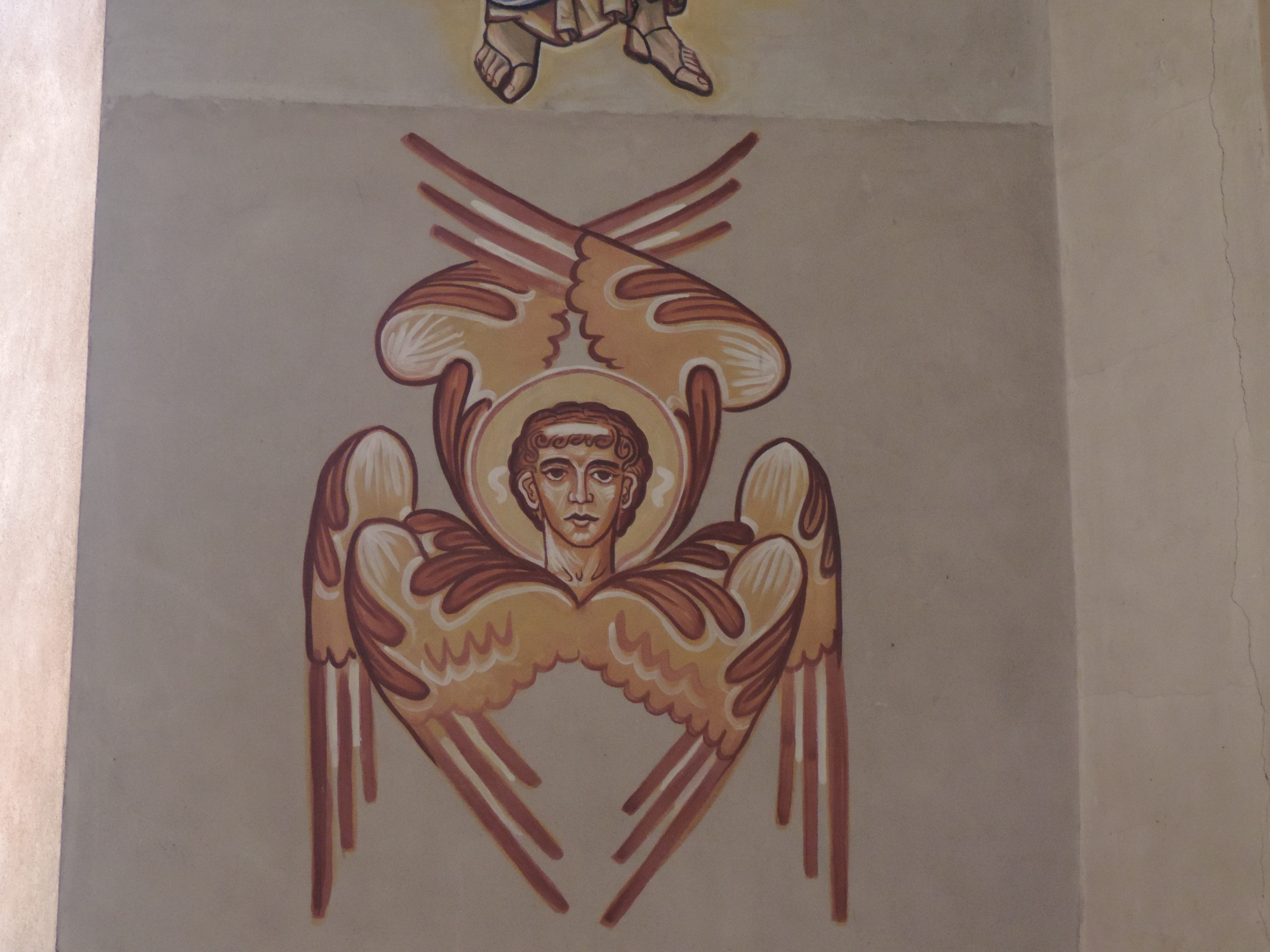
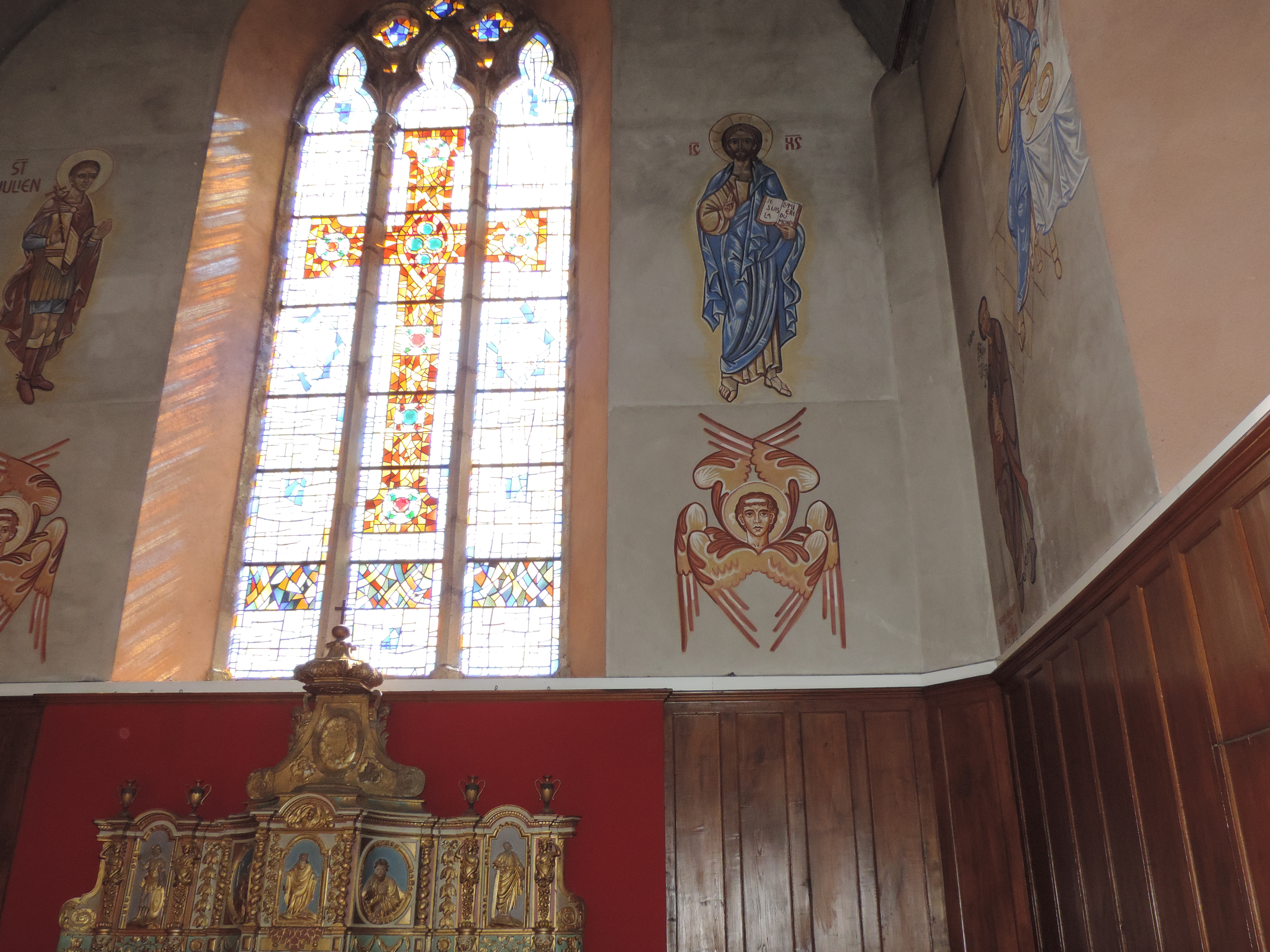
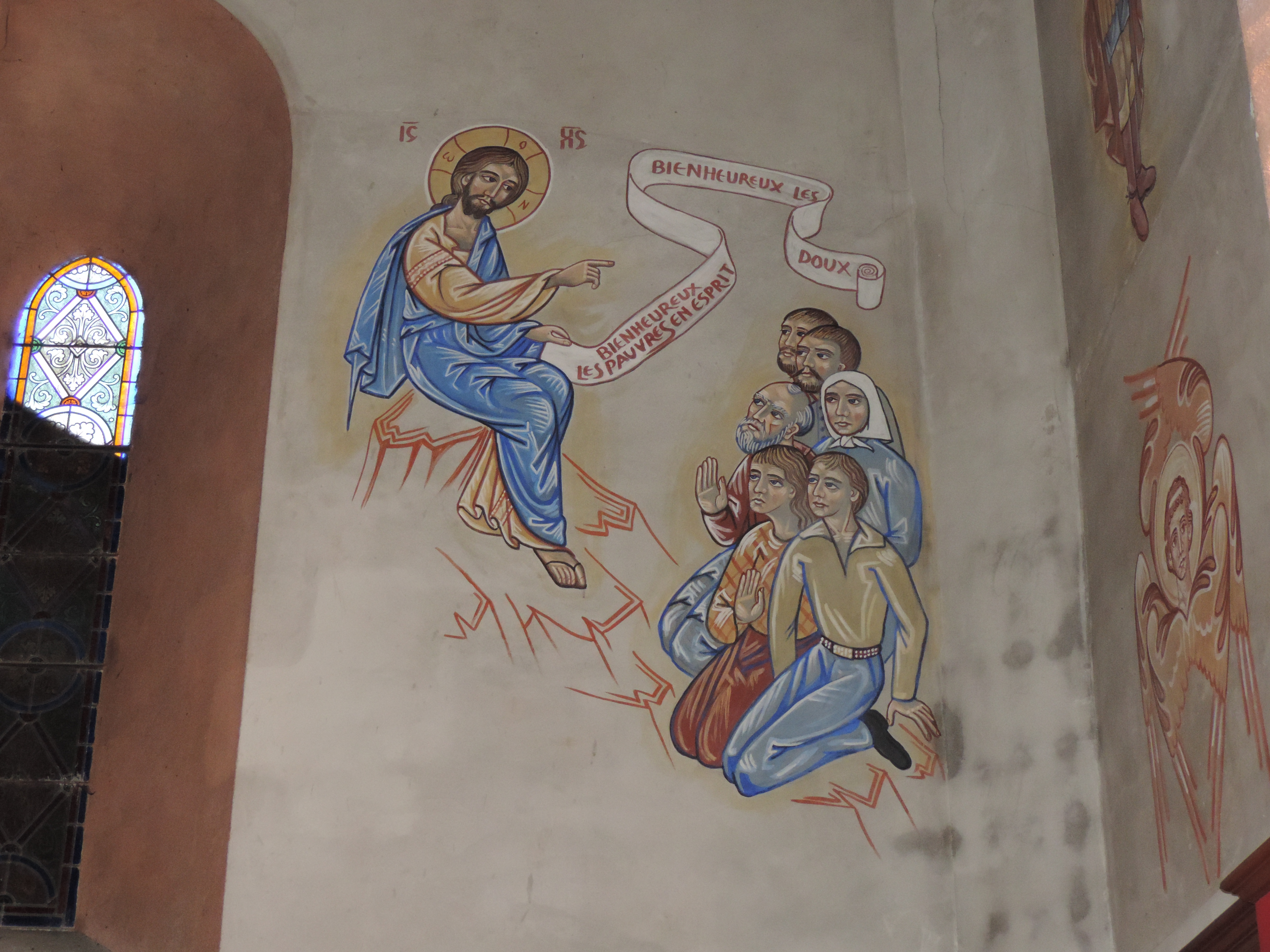
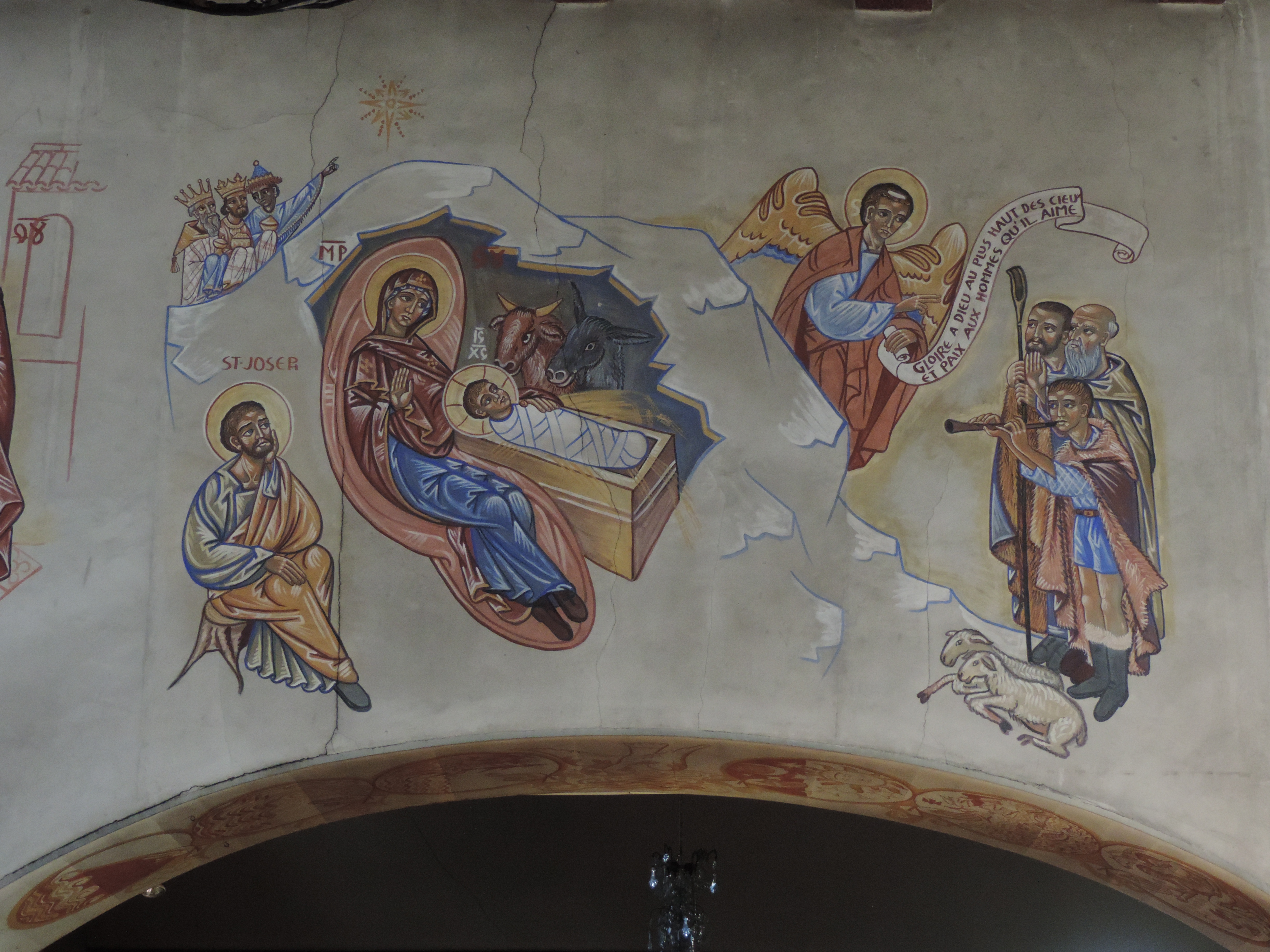
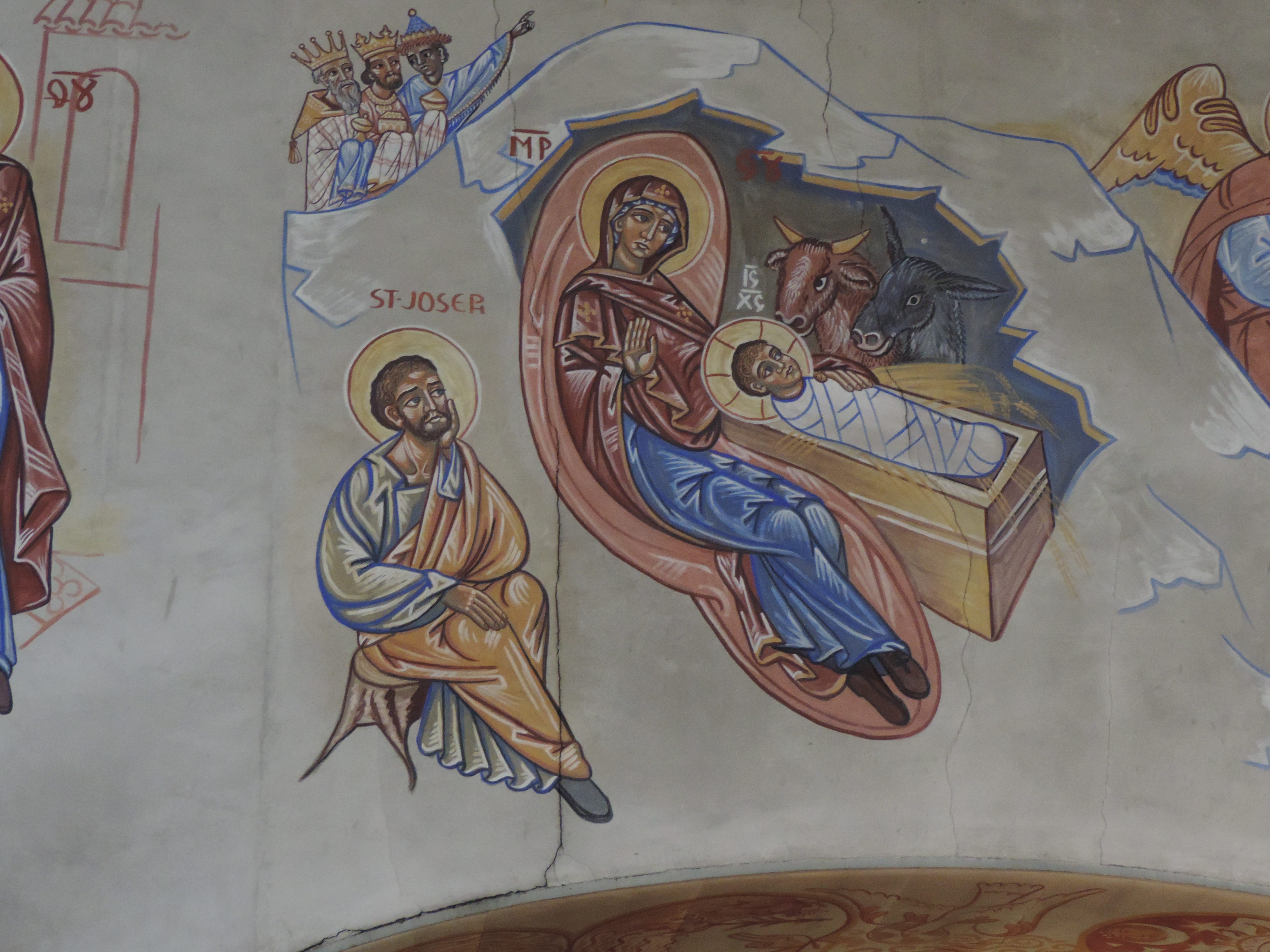
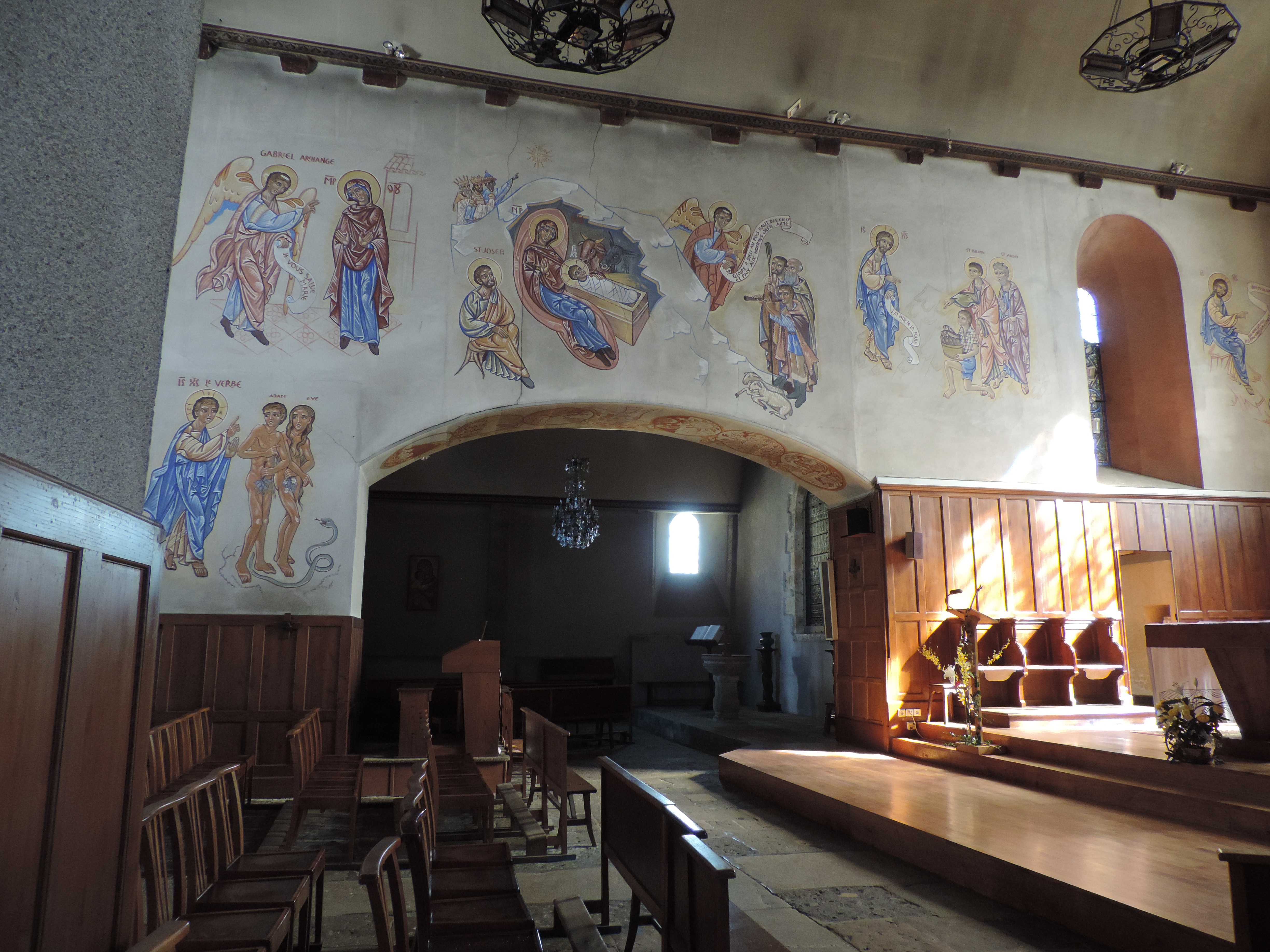
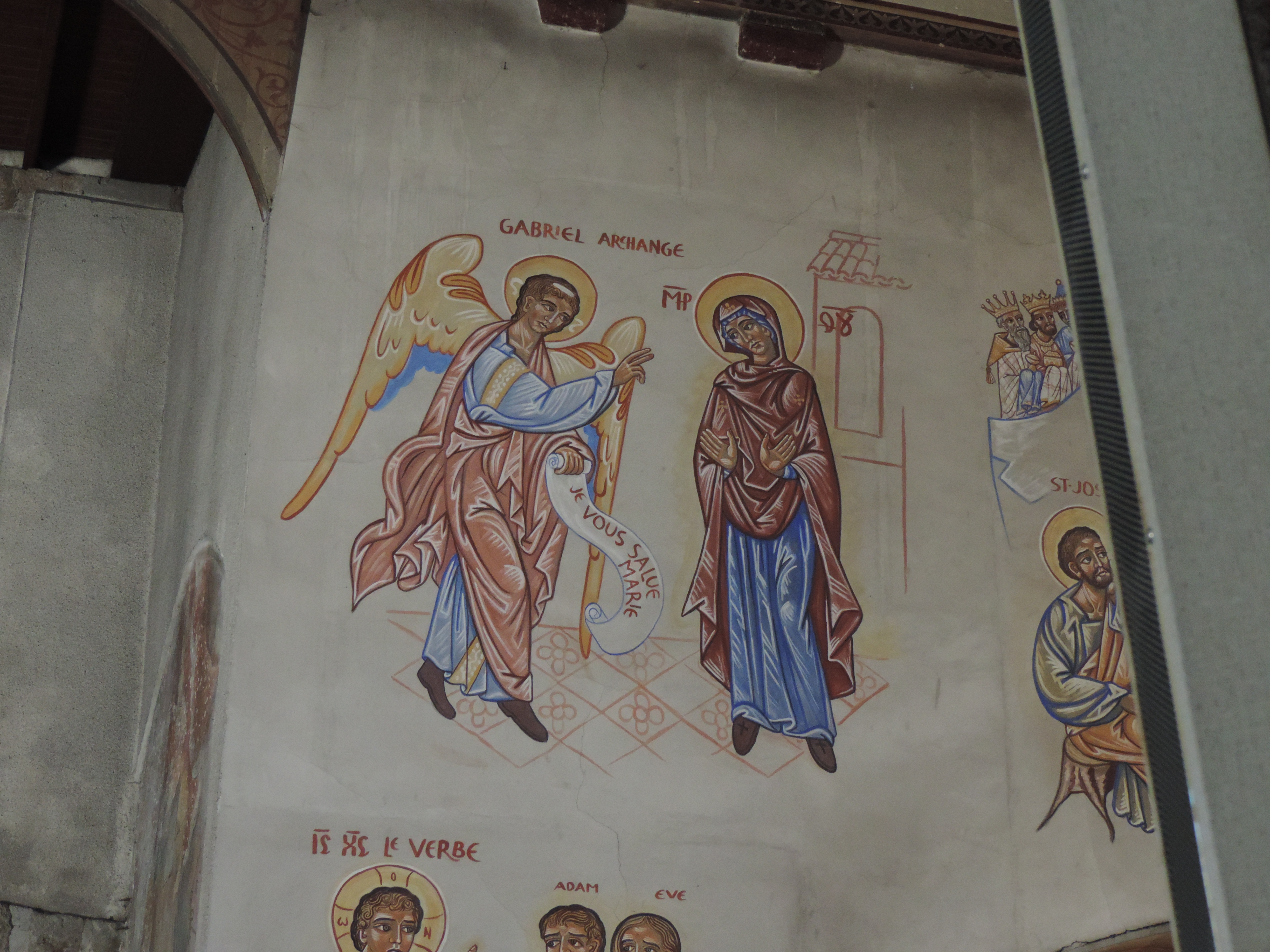
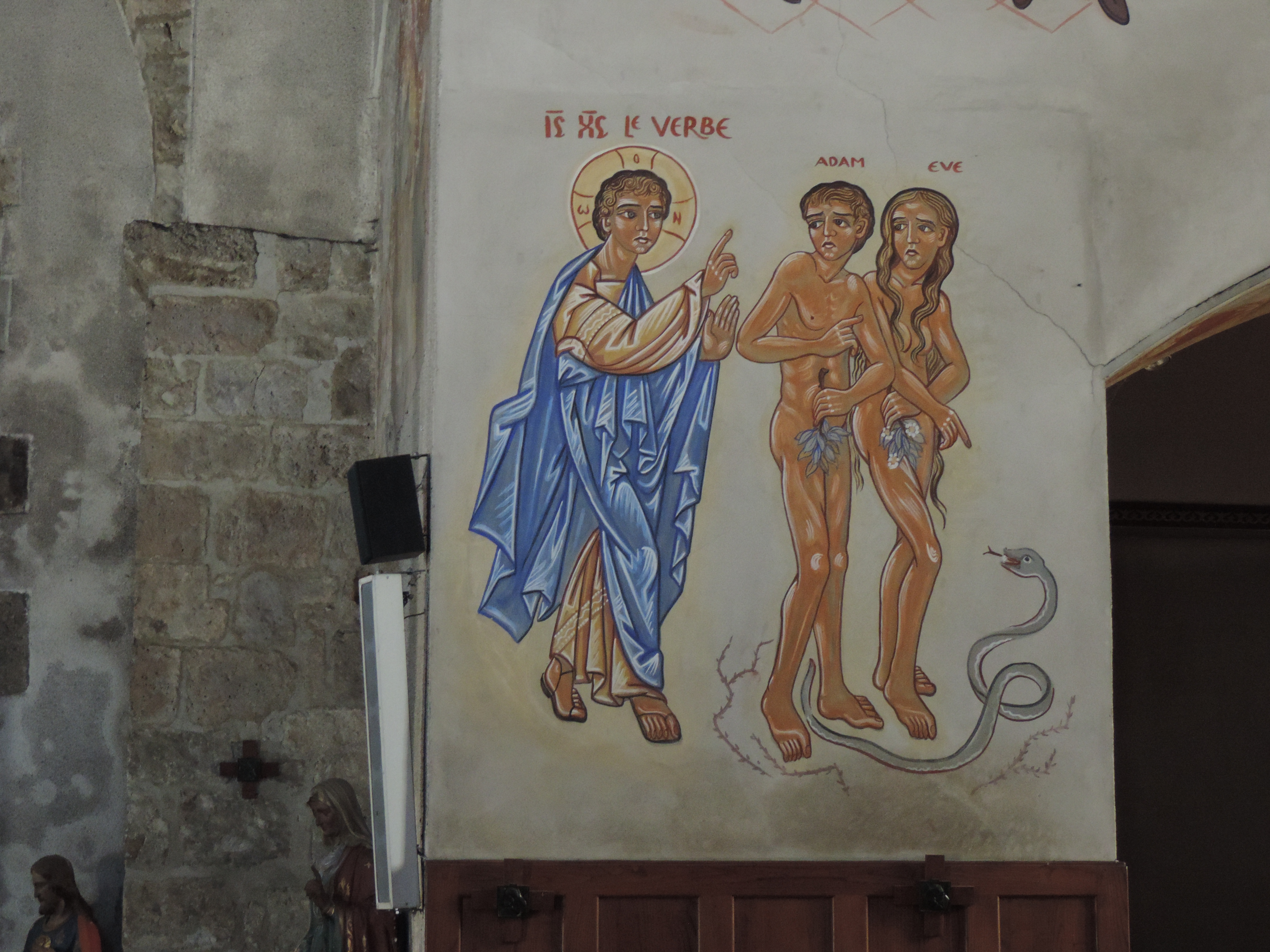
The parish church in the centre of the old town of Rochechouart in the Haute-Vienne, consecrated around 1060, boasts a distinctive twisted spire, and wonderful wall-paintings telling the story of salvation from Creation through to the Resurrection of Christ, and the last judgement.
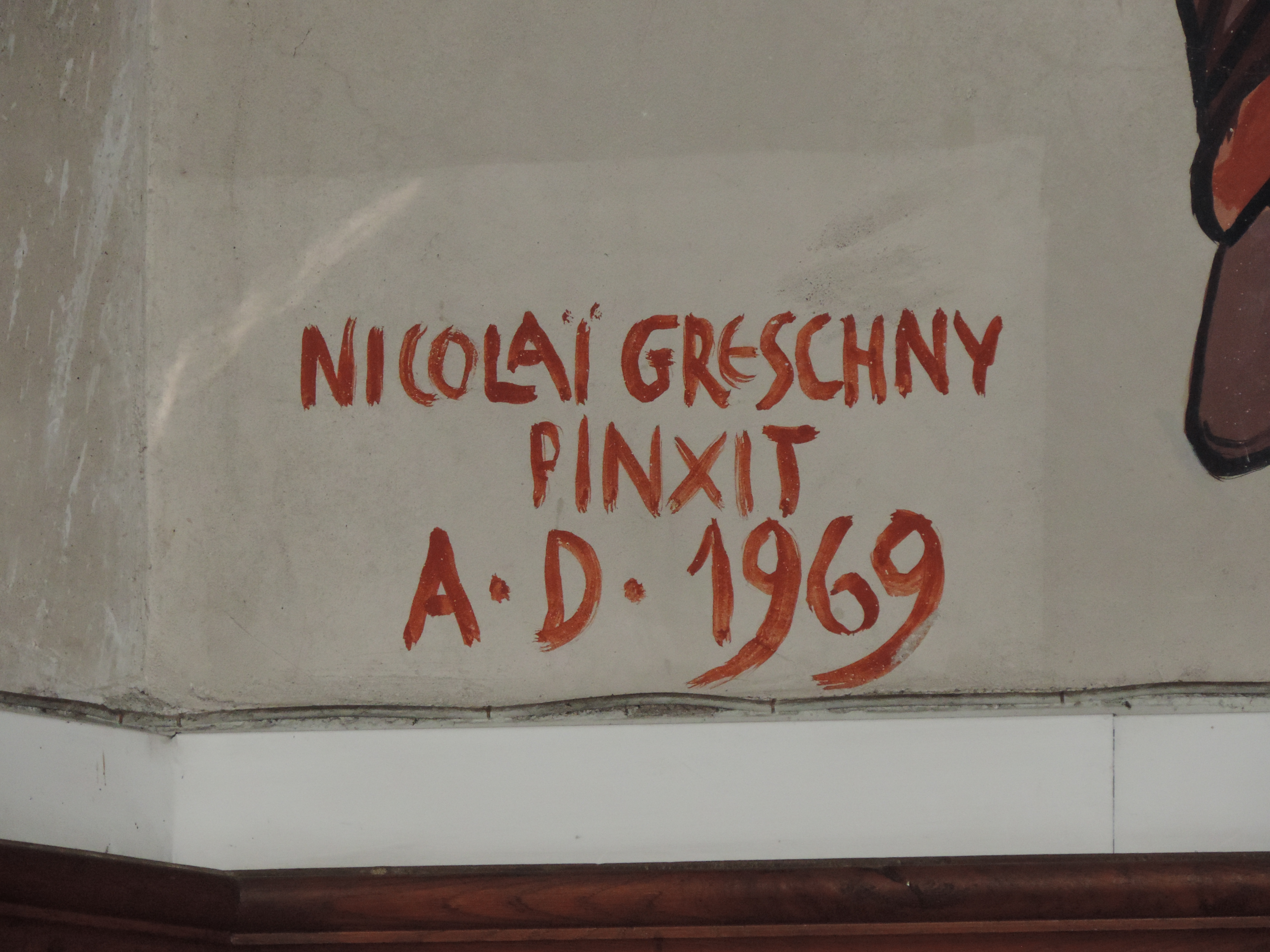
The frescoes were painted in 1969 by Nicolaï Greschny, an artist who combined Roman Catholic and Orthodox traditions in both life and theology, and completed work in some 150 churches around France.
Nicolaï was born in Estonia in 1912. His father, who died in 1922, was a deacon in the Catholic church and had a strong interest in Russian Orthodoxy. His mother, from a Hugenot family, encouraged Nicolaï as he began painting in a style influenced by Russian icons. After school Nicolaï entered a Jesuit novitiate with a view to going on to train at the Russicum in Rome, an institute dedicated to Russian spirituality and theology. He was expelled for bad behaviour –whatever that might mean – after a year, and went on to study art in Germany.
Between 1933, when he was part of a clandestine Catholic group gathering information on the Hitler youth, through to the end of the second world war, Nicolaï, was almost constantly on the run as successive invasions brought Nazis hard on his heels. Detained in Orleans he spent two months as prisoner in a camp until he was smuggled out and able to head to Toulouse where he resumed his studies in theology until the Nazis reached the south of France and he had to flee again, this time as a member of the French Resistance.
With the war over he spent time trying to work out what he should do with his life. Coming upon some ruins near Albi he set his heart on building a home and chapel there, a vision that he was able to implement with considerable help from friends. With his base at La Maurinié he was able to marry, start a family, and take on commissions for frescoes and icons.
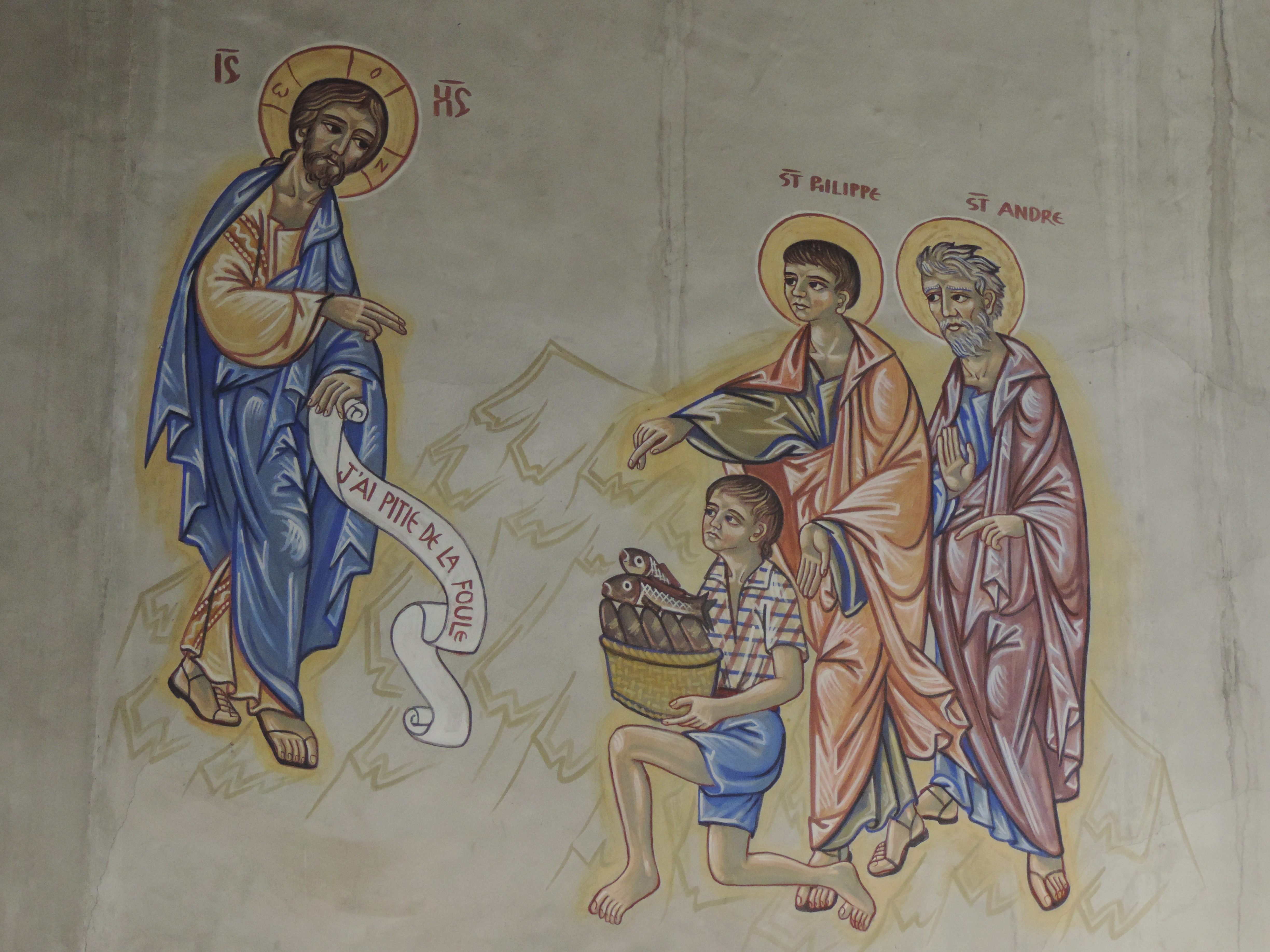
In 1969 he arrived in Rochechouart and painted the walls near the altar. The family stayed in one of the town-centre hotels and his son, Michael, recalled the time as being the best of holidays as it was a rare opportunity to be away together. Perhaps Michael was the model for the boy with a basket of bread and fish.
I’ve been to the Easter vigil a few times in Rochechouart and the frescoes obviously complement the readings and liturgy through to the joy of resurrection. Like many ancient churches the building could do with work on conservation and in particular, some areas of damp that threaten Nicolaï Greschny’s paintings. But if you happen to be anywhere in the area it’s well worth a visit. The church is usually open, and if it isn’t you might be fortunate enough to find the local undertaker, who holds the keys, presiding in a little antique shop just down the road.
Nicolaï Greschny died in 1985. A society promotes his work and encourages its preservation.
https://www.nicolaigreschny.net/
 Colin Brady